
Imagine a medical student in Kuala Lumpur participating in a virtual anatomy lab via virtual reality (VR) or a student in rural Sabah practicing illness diagnosis on a tablet using an AI-driven app.
That isn’t science fiction. Thanks to digital tools, artificial intelligence (AI), telemedicine, and online learning, that is what is currently occurring—and what Malaysia plans to do more of.
Malaysia is welcoming a new era where learning, wellness, and technology complement one another to advance both fields as it implements its Future Education Blueprint 2026–2036 and speeds up digital health initiatives.
The Trends Affecting Malaysian Health and Education

1. Artificial Intelligence and Digital Education
Future educational reforms in Malaysia will prioritize AI and digital learning to improve accessibility and personalization in the classroom. The new Education Blueprint 2026-2036 will promote improved digital infrastructure, increased access to technology in both urban and rural schools, and the use of AI tools in the classroom.
Platforms for adaptive learning are growing in popularity. These platforms help weaker students catch up while letting others go at their own pace by using artificial intelligence (AI) to modify lessons based on how students learn.
2. Augmented Reality (AR), Virtual Reality (VR), and Simulation Education
Without the use of cadavers or actual labs, medical education is using tools like virtual reality (VR) to teach anatomy and practice procedural simulations. As a result, learning becomes less limited by tangible resources and more immersive.
In a similar vein, AR/VR training benefits healthcare professionals in patient handling, diagnostics, and surgical techniques. These resources lower risk and improve training effectiveness.
3. Telemedicine & Education in Digital Health
Malaysia is investing in digital health education programs to teach professionals health informatics, telemedicine, and remote patient monitoring. ICT, data analytics, and health science are all combined in the Bachelor of Digital Health program offered by IMU (International Medical University).
The use of virtual consultations and telehealth is also growing. Remote diagnostics, health tracking apps, and cloud-based health records (EMR) are becoming more widespread, especially for underserved or rural populations.
4. Integrated Health Records and Interoperability
Malaysia presented plans for “One Individual, One Record” EMR infrastructure at HIMSS25 APAC in Kuala Lumpur. In order to efficiently access patient records, diagnostic histories, and treatments across hospitals and clinics, national interoperability is the aim.
This benefits patients (better continuity of care, fewer errors) as well as students (learning with real data, case studies).
Benefits: The Significance of This Integration
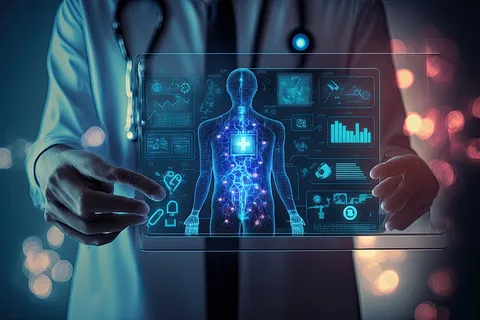
- Access & Equity: Patients and students in underserved or isolated areas can receive top-notch instruction and medical care. Physical infrastructure is not as necessary thanks to AI learning platforms, and telehealth cuts down on travel time for medical care.
- Efficiency & Cost Reduction: Online consultations, digital patient records, virtual labs, and simulations lower overhead, diagnose and treat patients more quickly, and cut down on waiting times.
- AI can adjust learning trajectories based on student performance, and the medical field can develop to customize treatment regimens by monitoring patient data and making recommendations.
- Health professionals are more accustomed to AI, telemedicine, and data analysis, which prepares them for modern systems. Students pursuing health-related careers are also better trained in digital tools.
Things to Be Aware of
- Digital Divide: Despite policy efforts, a lot of rural areas still lack dependable devices or internet. We need to upgrade the infrastructure.
- Training of Teachers and Health Workers: Teachers and health workers must be proficient in using tools for them to be effective. It is imperative that professionals receive ongoing training and development.
- Ethical and Data Privacy Issues: AI transparency and bias ethics must be addressed, and laws such as the PDPA must be followed when handling student and health data, particularly when connected through AI.
- Cost and Investment: Telemedicine platforms, EMR systems, and VR/AR labs all demand financial outlays; smaller clinics and institutions may find it difficult to purchase state-of-the-art equipment.
- Regulatory & Policy Alignment: Policies need to keep up—curricula must be updated, health regulations need to accommodate telehealth and remote diagnosis, and cross-sector coordination is necessary.
What Malaysia Is Doing / What Should Be Done

- The 2026–2036 Future Education Blueprint aligns education policy with equity, digital literacy, AI, and tech access.
- Digital health projects are growing: Malaysia is developing health data systems, mobile health applications, and digital clinics. To install EMR systems and shorten patient wait times, public hospitals are investing.
- Degree programs in Digital Health are being offered by institutions such as IMU in order to create a workforce that is proficient in both the tech and healthcare fields.
What else could be done:
- Increased public-private collaboration to lower rural tech adoption costs.
- Government grants and subsidies for the purchase of VR/AR simulation equipment for clinics and schools.
- AI in health and education is strictly regulated in terms of auditability, data security, and transparency.
- courses on digital literacy for educators, medical professionals, and even parents.
In conclusion, health + education equals a smarter Malaysia.
Combining AI-powered education with digital health is more than just a fad. For Malaysia’s future, it is strategically essential.
Malaysia can improve public health, create a workforce that is tech-savvy, lessen geographic disparities, and spur innovation and productivity by constructing systems that intelligently integrate healthcare and education.
Let Sizaf Infocomm assist in making the process of integrating AI learning tools, telemedicine platforms, or virtual reality labs seamless and compliant for educational institutions, clinics, or health tech startups.
Malaysia: +60 146600012
USA: +1 516 880 9996
One digital innovation at a time, let’s create a healthier, more intelligent Malaysia.
Leave a Reply