Tag: #EngineeringTech #PharmaInnovation #SmartManufacturing

  • Manufacturing Technology in Malaysia: How Innovation Is Transforming Production, Engineering & Pharma in 2026 

    Manufacturing Technology in Malaysia: How Innovation Is Transforming Production, Engineering & Pharma in 2026 

    The Malaysian Industry’s New Face

    You can sense that the hum of machines in any contemporary Malaysian factory or lab is now digital rather than merely mechanical.

    Data, sensors, and intelligent systems now power what previously relied on human labor.

    Malaysia’s industries are subtly going through one of the largest changes in decades, from pharmaceutical plants in Selangor to precision engineering companies in Penang.

    Automation is only one aspect of it; intelligence, efficiency, and creativity are also important.

    Instead of taking the place of people, technology is enabling them to do more, think more intelligently, and produce better work.

    1. Production Becomes More Intelligent: Transitioning from Manual to Digital Processes

    Do you recall the days of manual tracking, paper checklists, and clipboards on production floors?

    Those days are quickly coming to an end.

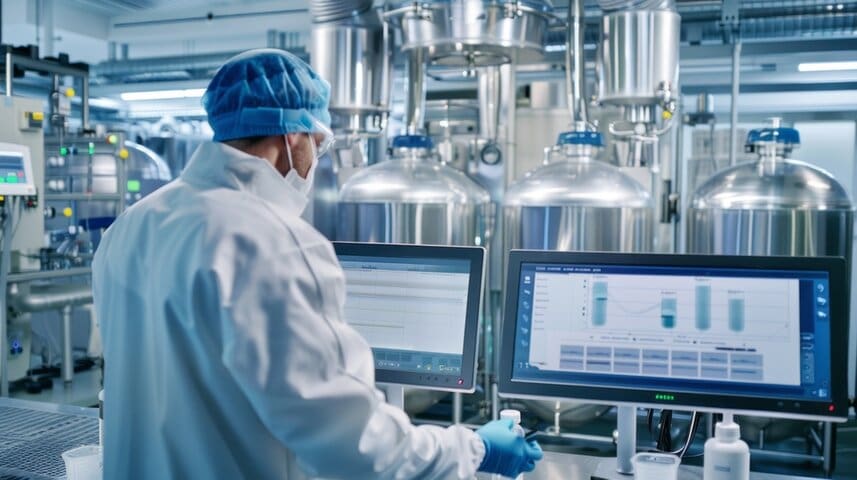
    IoT (Internet of Things) sensors are used in factories today to monitor machines in real time and anticipate problems before they arise.

    While humans oversee the larger picture—data, quality, and creativity—robots perform repetitive tasks with accuracy.

    Due to this change, traditional manufacturing has evolved into smart manufacturing, where all processes are linked, monitored, and optimized.

    This change is enabling Malaysian manufacturers to compete on a worldwide scale.

    For instance, factories in Johor and Penang are incorporating AI-driven systems to cut waste and energy usage, saving money while becoming more environmentally friendly.

    Efficiency is now the norm rather than an objective.

    2. Innovation and Engineering Come Together

    Malaysia

    From electronics and automobiles to oil and gas and construction, engineering has always been the foundation of Malaysia’s economy.

    However, the blueprint is currently being altered by digital tools.

    AI-based simulations, CAD automation, and 3D modeling are rendering designs that used to take weeks in a matter of hours.

    Complex systems can now be virtually tested by engineers before the first bolt is tightened.

    And it doesn’t end there.

    Digital twins, or virtual copies of machines, are used in smart factories to track performance and conduct experiments without interfering with production.

    Malaysia’s industrial sector is gaining a significant competitive advantage thanks to this combination of engineering intelligence and digital precision.

    3. The Pharmaceutical Sector: More Secure, Quicker, and Smarter

    The pharmaceutical industry is one that has experienced pressure to change quickly.

    The world learned from the pandemic that creativity and adaptability are vital.

    Pharmaceutical companies in Malaysia have responded admirably.

    To expedite everything from R&D to distribution, they are adopting automation, cloud-based supply chain systems, and AI-driven quality control.

    Imagine a lab in Kuala Lumpur that uses AI algorithms to analyze thousands of molecular structures in a matter of minutes, finding possible drug candidates that would have required months in conventional trials.

    In the meantime, cloud connectivity makes it possible for teams all over the world to work together safely and instantly.

    Lower costs, safer production, and quicker drug development are the outcomes.

    4. The Focus Is on Sustainability

    If all of this advancement came at the expense of the environment, it would be meaningless.

    Fortunately, sustainability is being taken seriously by Malaysia’s manufacturing and pharmaceutical industries.

    Green chemistry techniques, waste management systems, and energy-efficient machinery are all being purchased by factories.

    Pharmaceutical companies are using water-saving smart monitoring and eco-friendly packaging.

    Businesses can now accomplish what previously seemed unattainable: high productivity with minimal environmental impact thanks to technology.

    This goes beyond simple compliance.

    It’s a movement that synchronizes Malaysia’s development with the world’s green transition.

    5. How Cloud, IoT, and AI Will Shape the Future

    Malaysia

    Let’s stand back and consider the wider picture.

    This industrial revolution is being propelled by what? AI, IoT, and cloud are three straightforward terms.

    Artificial Intelligence (AI) makes decisions more quickly and accurately than humans by analyzing vast amounts of data.

    By connecting machines, sensors, and other devices, the Internet of Things (IoT) creates an ecosystem in which all processes are visible and controllable.

    All of this data is securely and effectively accessible at any time and from any location thanks to cloud computing.

    Together, they are transforming Malaysia’s laboratories and factories into intelligent ecosystems capable of constant growth, learning, and adaptation.

    And here’s the best part — these technologies don’t just benefit big corporations.

    Small and medium enterprises (SMEs) are jumping in too, adopting affordable cloud tools and IoT solutions to scale operations without heavy costs.

    6. Closing the Skills Divide

    However, technology is insufficient on its own.

    People must change if Malaysia’s industrial future is to prosper.

    All industries are starting to prioritize upskilling and reskilling.

    Production managers are training in automation systems, lab technicians are investigating AI-assisted workflows, and engineers are studying data analytics.

    The magic happens in this human-technology balance, where creativity and purpose collide.

    To keep Malaysia’s workforce prepared for the future, private organizations and educational institutions are collaborating.

    Because even the most intelligent machine is only as good as the person operating it.

    7. What Lies Ahead: Malaysia’s Path to a Smarter Industry

    Looking ahead, Malaysia is positioning itself as a regional hub for smart industry and pharmaceutical innovation.

    Government initiatives under Industry4WRD and MyDigital are supporting companies with incentives, infrastructure, and digital training programs.

    We’re heading toward a future where factories operate 24/7 with predictive systems, pharma labs discover cures faster, and engineers collaborate seamlessly across digital platforms.

    Technology isn’t just transforming industries — it’s shaping Malaysia’s identity as a forward-thinking, innovation-driven economy.

    Conclusion: Stronger Malaysia, Smarter Systems

    Every revolution starts out quietly, with minor adjustments that pave the way for larger ones.

    Production facilities, engineering labs, and pharmaceutical factories in Malaysia are currently undergoing that revolution.

    Technology is now a bridge that connects people, advancement, and purpose rather than just a tool.

    By integrating AI, cloud solutions, cybersecurity, and IoT systems that make operations smarter, faster, and more secure, we at Sizaf Infocomm assist industries in embracing this shift.

    Get in touch with us right now:

    Malaysia: +60 146600012

    USA: +1 516 880 9996

    One clever innovation at a time, let’s construct Malaysia’s industrial strength for the future.

  • Revolutionizing Engineering & Pharma with Managed IT Services and Smart Manufacturing

    Revolutionizing Engineering & Pharma with Managed IT Services and Smart Manufacturing

    Introduction: The Industry’s Digital Frontier

    As the world’s industries transition into the digital era, engineering and pharma companies need to innovate rapidly. Be it IoT in smart manufacturing or IT compliance in the pharma industry, organizations seek end-to-end solutions that deliver operational efficiency, data security, and regulatory compliance. This is where the managed IT services of engineering companies take over—facilitating the ease of scaling while embracing technologies like AI, cloud computing, and cyber-physical systems for manufacturing. 

    The Rise of Smart Manufacturing: Connected, Efficient, Scalable

    Smart manufacturing is no longer a dream for the future—today it exists. With the assistance of IoT in smart manufacturing, engineering firms are employing sensors, automation, and real-time data to improve production and quality. Industrial IoT (IIoT) solutions for engineering firms connect machines, systems, and people into a smart network of intelligent machines and systems, so-called the cyber-physical factory.

    For instance, a few examples of cyber-physical systems in manufacturing include real-time machine monitoring, automated defect detection, and predictive maintenance—all of which reduce downtime and increase productivity.

    Cloud Computing: Facilitating the Engineering Workflow

    Revolutionizing Engineering & Pharma with Managed IT Services and Smart Manufacturing

    Cloud engineering software is increasingly being used by manufacturing companies these days. From cloud computing for manufacturing enterprises to cloud storage for engineering companies, cloud infrastructure offers scalable, flexible, and cost-effective IT solutions.

    Cloud computing manufacturers benefit from greater interdepartmental collaboration, streamlined product development times, and transparent design, test, and manufacturing integration. Cloud computer engineers gain opportunities to develop solid, secure digital frameworks in this paradigm.

    Connectivity: Internet, Edge, and 5G for Industry

    Having a high-speed and reliable internet is the center of any production smart space. Industrial automation needs high-speed industrial internet, industrial manufacturing factory internet, and industrial automation’s 5G internet connectivity in order to transmit the huge amounts of machine data with low latency levels.

    Production industry edge computing also boosts local processing of data, reducing latency and allowing real-time decision-making in smart factory CPS systems. This level of IoT connectivity to smart factories offers efficient control and analysis at the point of operation.

    Cybersecurity: Protecting Data, Complying

    In a technology-driven manufacturing industry, security comes first. Technologies of cybersecurity for manufacturing like security for manufacturing networks are of top priority in safeguarding confidential data, intellectual property, and business continuity.

    In the pharmaceutical industry, stakes are even higher. Manufacturing industry data security, pharma data security, and FDA & GMP compliant IT solutions keep sensitive data safe and industry-tight regulated data such as GDPR in the pharma industry safe and compliant.

    Pharma IT compliance and pharma industry IT compliance establish trust and avert costly legal repercussions, while pharma company secure network solutions and VPN remote industrial monitoring assure security throughout digital ecosystems.

    AI and Automation: Quality, Innovation, Intelligence

    Revolutionizing Engineering & Pharma with Managed IT Services and Smart Manufacturing

    Artificial intelligence is revolutionizing how companies operate. From AI-driven production in industries to AI-enabled quality control in pharma, smart algorithms now play a key part in identifying defects, optimizing supply chains, and predicting equipment failure ahead of time.

    Together with computer vision technologies in retail and digital twins in smart factories, AI enables quick prototyping, self-learning decision-making, and instantaneous fault correction—radically improving efficiency and product quality.

    Digital Marketing & Lead Generation: Fueling Business Growth

    While things are improving behind the scenes, engineering and pharma companies are also turning to digital marketing for pharma firms in order to take market share and create leads.

    Top pharma digital marketing firms employ innovative techniques like digital marketing strategy for pharma firms, pharmaceutical digital ads, and digital marketing for pharmacies to target healthcare professionals, distributors, and patients.

    Additionally, technology business lead generation and leading B2B lead generation firms allow engineering and manufacturing companies to connect with decision-makers across industries. Growth in B2B e-commerce among manufacturers allows for cost-effective digital buying, expanding reach without geographical bounds.

    Smart Factory Solutions in Malaysia & Beyond

    Revolutionizing Engineering & Pharma with Managed IT Services and Smart Manufacturing

    At the national level, initiatives like smart factory solutions in Malaysia are spearheading the industrial modernization effort. With the combination of cloud-based software development, cyber-physical manufacturing systems, and secure IT infrastructures, these initiatives pave the way for industries to succeed in the long term in an increasingly competitive global marketplace.

    Conclusion: Build Smarter, Operate Safer, Grow Faster

    Pharma and engineering companies must embrace digital transformation to be competitive, compliant, and successful. From compliance in pharma IT to smart manufacturing with IoT, every aspect of your company can benefit from intelligent, scalable IT projects.

    At sizaf Infocomm, our specialty is end-to-end digital solutions tailored to your industry. Whether you need cloud infrastructure, AI-driven automation, or data security, we can lead you to the pinnacle of this digital age.

    Connect with us now!

     Malaysia: +60 14-660 0012

     USA: +1 516 880 9996

    Let’s make a difference, together.